Program / Event Details
Provider: Mindful Flames Creative Experience
Contact Details
MINDFUL FLAMES CREATIVE EXPERIENCE
CREATIVE WELLNESS & STEAM LAB
Creating, Exploring, Designing & Discovering Through Hands-On Learning
Program Overview
Creative Wellness & STEAM Lab is an arts-integrated enrichment program where students explore creativity, science, technology, engineering, mathematics, wellness, design, and entrepreneurship through hands-on product creation and interactive experiences.
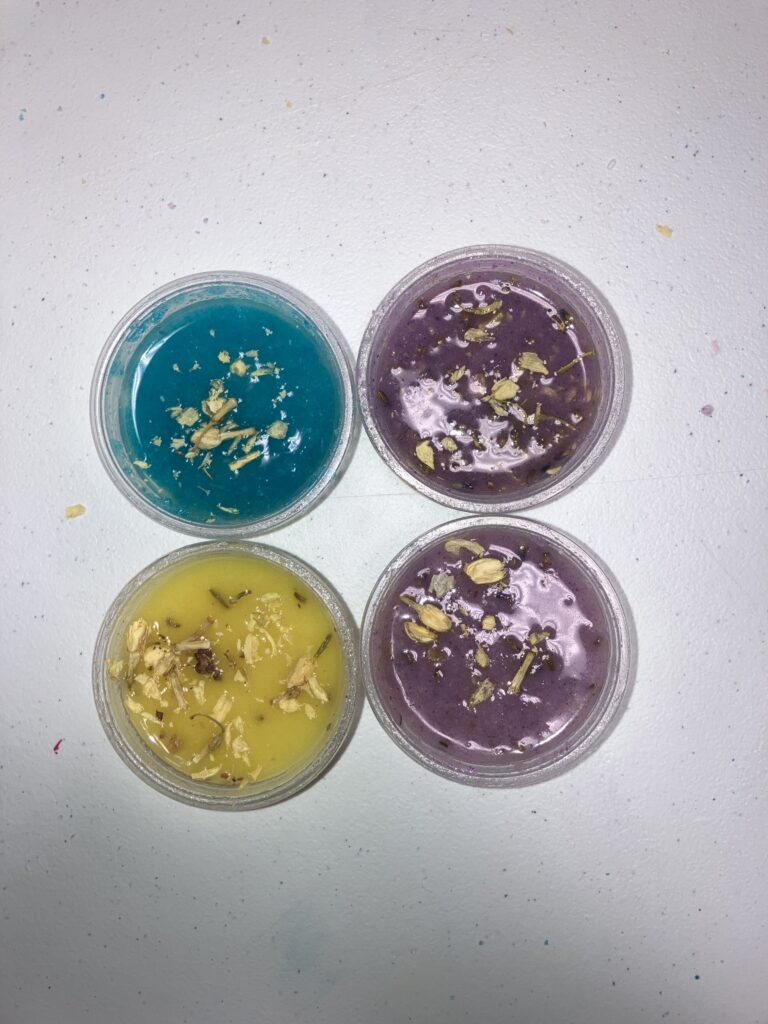
Using projects such as soap making, candle making, bath and body products, slime, fragrance exploration, and other creative design experiences, students discover how art connects with science and how STEM concepts can be applied to everyday life.
The program goes beyond simply creating a finished product. Students experience the complete creative process:
IMAGINE → DESIGN → MEASURE → CREATE → EXPERIMENT → REVISE → REFLECT
Students are encouraged to ask questions, test ideas, make observations, solve problems, make creative decisions, and learn from mistakes. Through this process, students develop confidence, curiosity, communication skills, critical thinking, and a deeper understanding of how artists, scientists, designers, and entrepreneurs use creativity to solve problems and create meaningful products.
Program Duration
12 weeks | One session per week
Target Audience
Ages 4–18+
Activities and instructional expectations are adapted based on students’ developmental levels, grade levels, and abilities.
Program Goals
Students will:
- Explore the connections between art, science, technology, engineering, and mathematics (STEAM).
- Develop creativity, curiosity, and confidence.
- Practice critical thinking and problem-solving.
- Apply measurement, ratios, fractions, estimation, and basic mathematical concepts.
- Explore scientific concepts including matter, mixtures, chemical and physical changes, temperature, texture, density, and cause and effect.
- Develop design-thinking and experimentation skills.
- Practice following directions, using tools safely, and working with precision.
- Explore wellness and healthy self-care practices.
- Develop communication, collaboration, and reflection skills.
- Explore entrepreneurship through product development, branding, packaging, pricing, and presentation.
- Understand that creativity can be used to solve problems and create opportunities.
- Take pride in creating, testing, improving, and sharing their ideas.
12-WEEK CURRICULUM
WEEK 1 — INTRODUCTION: PLAY IT SAFE
Session 1: Welcome to the Creative Wellness & STEAM Lab
Students are introduced to the program, classroom expectations, safety procedures, and the creative process.
Students Will:
- Participate in icebreakers and introductions.
- Learn classroom expectations and collaboration guidelines.
- Explore what STEAM means and how the subjects connect.
- Discuss the difference between an artist, scientist, designer, inventor, and entrepreneur.
- Learn basic heat and equipment safety.
- Practice proper cleanup and workspace organization.
- Explore basic measurement tools.
STEAM Connection:
Science: observation and safety
Technology: tools and equipment
Engineering: designing and improving
Art: creativity and expression
Math: measurement and comparison
Measurement Mini-Lab:
Students compare different ways to measure materials, such as:
- Weight vs. volume
- Measuring cups vs. scales
- Temperature
- Length
- Estimation
Students discuss why choosing the correct measurement method matters.
WEEKS 2–5 — CREATIVE MEASUREMENT
WEEK 2 — LIP CANDY LAB
Session 2: Mixing, Measuring & Formulating
Students explore how ingredients can be measured and combined to create a finished product.
Students Will:
- Learn about ingredients and their individual properties.
- Practice measuring and combining ingredients.
- Explore texture, scent, color, and consistency.
- Observe how changing an ingredient or measurement can affect the final product.
- Create and customize their own lip candy product.
STEAM Connection:
Science: mixtures and material properties
Math: measurement and ratios
Art: color and design
Entrepreneurship: product customization and presentation
WEEK 3 — DIY FRESHNESS LAB
Session 3: Measure, Mix & Create
Students explore measurement, fractions, ratios, and consistency while creating a personal-care or home-fragrance product.
Students Will:
- Practice measuring ingredients accurately.
- Explore fractions and ratios.
- Observe how ingredients interact.
- Experiment with scent and texture.
- Create a customized product.
- Design simple packaging or a product label.
Creative Challenge:
What happens when we change the ratio?
Students can compare different formulations and discuss how changing one variable affects the final product.
WEEK 4 — BATH BOMB CHEMISTRY LAB
Session 4: The Science of Fizz
Students investigate the science behind bath bombs while designing their own product.
Students Will:
- Explore acids and bases at an age-appropriate level.
- Observe a chemical reaction that produces carbon dioxide.
- Learn about measurement and ratios.
- Experiment with color, scent, shape, and texture.
- Create a customized bath bomb.
- Observe and document what happens when the bath bomb meets water.
STEAM Connection:
Science: chemical reactions and properties of matter
Math: ratios and measurement
Art: color, shape, and design
Engineering: testing and improving a product
Investigation:
What makes a bath bomb fizz?
Students make observations before, during, and after the reaction.
WEEK 5 — ORIGINAL SLIME LAB
Session 5: Texture, Mixtures & Material Science
Students explore how different materials combine to create a unique texture and consistency.
Students Will:
- Explore mixtures and material properties.
- Practice precise measurement.
- Observe changes in texture and consistency.
- Experiment with color, scent, and add-ins when appropriate.
- Identify variables that can change the final product.
- Troubleshoot when the product does not turn out as expected.
Creative Challenge:
Can you change the texture without changing the purpose?
Students experiment, observe, and revise their formulas.
WEEKS 6–8 — TEXTURE & WELLNESS DISCOVERY
WEEK 6 — DIY BODY SCRUB LAB
Session 6: Texture, Exfoliation & Self-Care
Students explore the relationship between texture, ingredients, wellness, and product design.
Students Will:
- Explore the purpose of exfoliation.
- Compare different textures and ingredients.
- Learn about moisturizing and exfoliating properties.
- Practice measurement and mixing.
- Create a customized body scrub.
- Discuss healthy self-care habits.
STEAM Connection:
Science: material properties and skin-care concepts
Math: measurement and ratios
Art: color and packaging
Wellness: self-care and personal responsibility
WEEK 7 — FOAM SLIME LAB
Session 7: States of Matter & Texture
Students explore physical properties and how materials can change through mixing.
Students Will:
- Identify solids, liquids, and gases.
- Explore how mixtures can change physical properties.
- Practice accurate measurement.
- Compare different textures.
- Experiment with consistency.
- Record observations.
Creative Challenge:
Students modify their design and explain what they changed and why.
WEEK 8 — Body SCRUB
Session 8: Natural Ingredients & Product Design
Students explore how everyday ingredients can be used to create wellness products.
Students Will:
- Identify common ingredients used in body-care products.
- Explore exfoliating and moisturizing properties.
- Discuss the role of texture in product design.
- Practice measuring and mixing.
- Create a brown sugar and oatmeal scrub.
- Design a name and label for their product.
Entrepreneurship Connection:
Students consider:
Who would use this product?
What problem does it solve?
How would you package it?
WEEKS 9–11 — MELT, MIX & TRANSFORM
WEEK 9 — SMOOTH OPERATOR: LIP BALM LAB
Session 9: Melting, Cooling & Product Formulation
Students explore how heat and cooling can transform materials.
Students Will:
- Observe melting and cooling processes.
- Explore how temperature affects materials.
- Practice measurement and formulation.
- Create a lip balm product.
- Explore color, scent, packaging, and branding.
STEAM Connection:
Science: physical changes and temperature
Math: measurement and ratios
Art: product design
Entrepreneurship: branding and packaging
WEEK 10 — WAX MELT BAR
Session 10: Melt, Mix & Design
Students explore the properties of wax and how temperature affects its physical state.
Students Will:
- Identify properties of wax.
- Explore melting and solidification.
- Discuss fragrance and material properties.
- Practice measurement.
- Experiment with colors and shapes.
- Design and create wax melts.
- Create a product name and simple packaging concept.
Design Challenge:
Can you create a wax melt that communicates a mood, memory, season, or feeling?
WEEK 11 — SOAP MAKING LAB
Session 11: Chemistry, Design & Transformation
Students explore how soap is created and how chemistry is used to transform ingredients into useful products.
For younger students, a melt-and-pour soap process may be used for hands-on creation. More advanced students may explore the concept of saponification at an age-appropriate level.
Students Will:
- Explore how soap is used to clean.
- Learn about oils, fats, and soap-making chemistry.
- Explore the concept of saponification.
- Observe how materials change during the soap-making process.
- Experiment with color, shape, scent, and design.
- Create a unique soap product.
Entrepreneurship Connection:
Students develop:
- Product name
- Target customer
- Packaging concept
- Brand message
WEEK 12 — LET’S GET LIT
Session 12: Candle Making & Creative Showcase
Students bring together science, creativity, design, and entrepreneurship through candle making.
Students Will:
- Explore how wax melts and solidifies.
- Learn about fragrance oils and scent selection.
- Explore the role of the wick in candle burning.
- Practice measurement and safe candle-making procedures.
- Design a unique candle.
- Create a candle name and label.
- Explain their creative decisions.
- Reflect on what they learned throughout the program.
Final Creative Challenge:
Create something that represents YOU.
Students design a final product or presentation that demonstrates their creativity, scientific thinking, and personal expression.
ASSESSMENT & REFLECTION
Assessment is integrated throughout the program and focuses on the process, not simply the finished product.
Students will demonstrate learning through:
- Hands-on experimentation
- Scientific observations
- Measurement activities
- Design challenges
- Product creation
- Problem-solving
- Group collaboration
- Verbal discussion
- Written or visual reflection
- Product presentations
- Creative decision-making
Mindfulness & Wellness Check-Ins
Each session may begin or end with a brief check-in encouraging students to:
- Identify how they are feeling.
- Reflect on their experience.
- Practice healthy coping strategies.
- Recognize personal accomplishments.
- Discuss challenges and how they worked through them.
Reflection Questions
Students may be asked:
What did I create?
What did I discover?
What worked?
What didn’t work?
What would I change?
What problem did I solve?
What did I learn about myself?
ENTREPRENEURSHIP CONNECTION
Throughout the program, students are introduced to the idea that creativity can become an opportunity.
Students may explore:
- Product development
- Branding
- Packaging
- Target customers
- Pricing
- Cost vs. profit
- Marketing
- Product photography
- Presentation
- Customer needs
- Problem-solving
- Innovation
Students learn that an idea does not have to remain an idea—it can become something tangible, useful, and meaningful.
RESOURCES & MATERIALS
Depending on the session and student age group, materials may include:
- Measuring cups and spoons
- Digital scales
- Thermometers
- Mixing bowls and containers
- Pipettes and droppers
- Basic science tools
- Art and design supplies
- Wax and candle-making supplies
- Soap-making supplies
- Bath bomb ingredients
- Body-care ingredients
- Lip balm/lip product ingredients
- Slime-making materials
- Fragrance and colorants appropriate for the intended product
- Packaging and labeling supplies
- Personal protective equipment
- Cleaning and sanitation supplies
Facility Requirements
When applicable, sessions may require:
- Access to water and sinks
- Appropriate workspace
- Adequate ventilation
- Safe electrical access
- Approved heat sources
- Appropriate safety equipment
- Age-appropriate supervision
ACCESSIBILITY & DIFFERENTIATION
Activities are adapted based on:
- Student age and grade level
- Developmental needs
- Learning styles
- Fine-motor abilities
- Sensory preferences
- English language proficiency
- Special education needs
- Advanced/gifted learners
Students may demonstrate learning through speaking, writing, drawing, designing, building, demonstrating, or creating.
The goal is to provide multiple ways for students to participate and demonstrate understanding.
PROGRAM NOTES
Activities may vary based on student age, grade level, developmental needs, available materials, and program setting.
The order of activities may be adjusted based on program needs.
Activities involving heat sources will be limited to age-appropriate students and conducted with appropriate safety procedures and adult supervision.
Certain chemistry-based activities may be demonstrated or modified for younger students.
Product ingredients and materials will be selected based on age appropriateness, safety, intended use, and program setting.
THE CREATIVE WELLNESS & STEAM LAB PHILOSOPHY
Creative Wellness & STEAM Lab is about more than making things.
It gives students an opportunity to imagine, create, experiment, problem-solve, express themselves, and discover what they are capable of.
Through hands-on experiences, students learn that science can be creative, art can be analytical, wellness can be intentional, and entrepreneurship can begin with a simple idea.
CREATE IT. EXPLORE IT. TEST IT. IMPROVE IT. SHARE IT.
Because every student has something meaningful to create.